
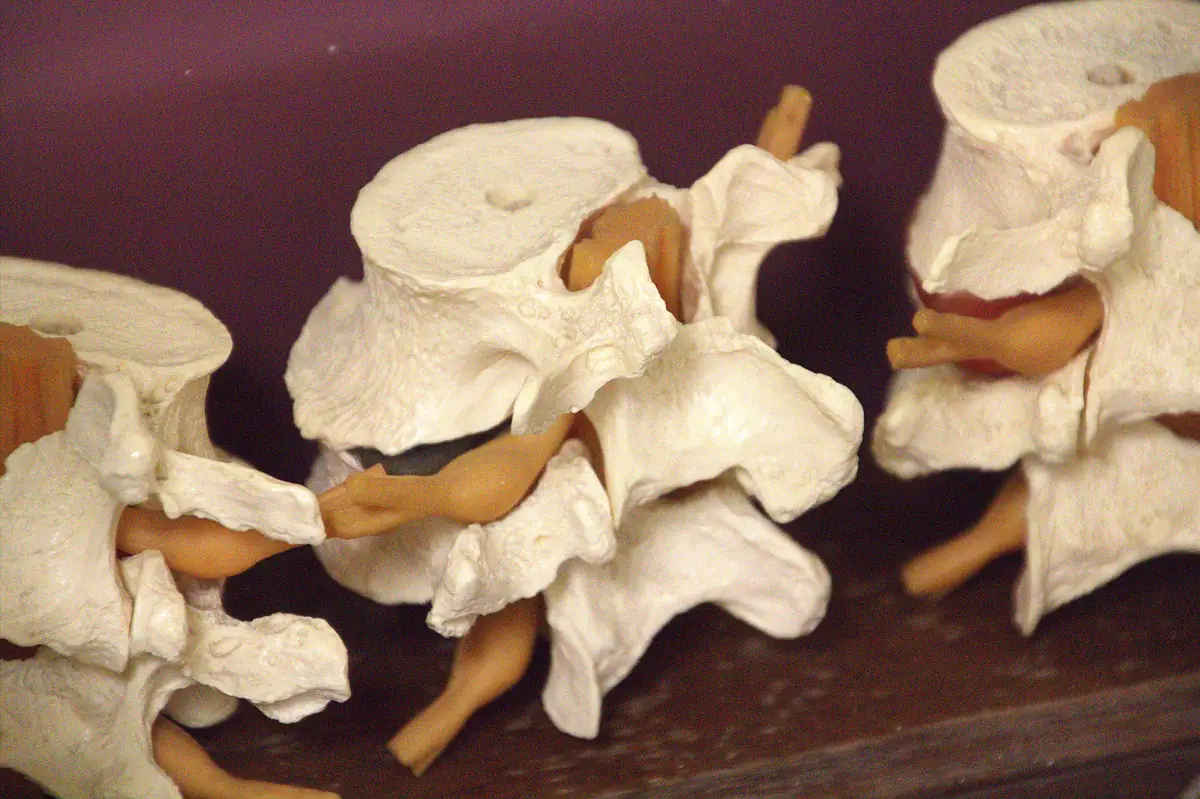
What a herniated disc is
Each disc has a tough outer ring and a softer center. With age, strain or injury, the disc can bulge, or the center can push through the outer ring (a herniation). If it presses on a nerve root, it can cause pain, numbness or tingling that follows that nerve, such as sciatica down the leg.
Common signs
- Back or neck pain that travels into a leg or arm
- Numbness, tingling or burning
- Pain that is worse when sitting, bending or coughing
- Weakness in the leg or arm
Get care right away if you have
- Loss of bladder or bowel control
- Numbness in the groin or inner thighs
- Sudden or worsening weakness in a leg or arm
- Pain after a serious fall or accident
How we help at Grace Wellness
Your doctor finds which disc and nerve root are involved through a careful exam, and reviews any MRI you bring.
Care may include decompression therapy, flexion-distraction on a Leander table, gentle low-force adjustments and exercises that take pressure off the nerve. If you need a specialist, we'll refer you.
What happens at your first visit
- Paperwork. A few forms about your health. Fill them out online before you arrive to save time.
- Consultation and exam. You talk through your symptoms and goals, then your doctor checks posture, range of motion, reflexes and strength.
- X-rays, only if needed. Taken right here in the office, no separate appointment.
- Your first treatment. In most cases you're treated the same day, and your doctor explains each step before starting.
Questions patients ask
Can you adjust a herniated disc?
Your doctor chooses gentle, appropriate techniques after examining you and reviewing your imaging. Decompression and flexion-distraction are often used for disc-related pain.
Do I need surgery?
Many people with a herniated disc improve without surgery. Warning signs like loss of bladder or bowel control or worsening weakness need urgent medical care.
Should I bring my MRI?
Yes. Bring any recent MRI, X-rays or doctor's notes to your first visit.
Related care
Sources: MedlinePlus: Herniated disk. NIH NCCIH: Low back pain and complementary health approaches. This page is general information, not a diagnosis. Your doctor will examine you and explain your options.