
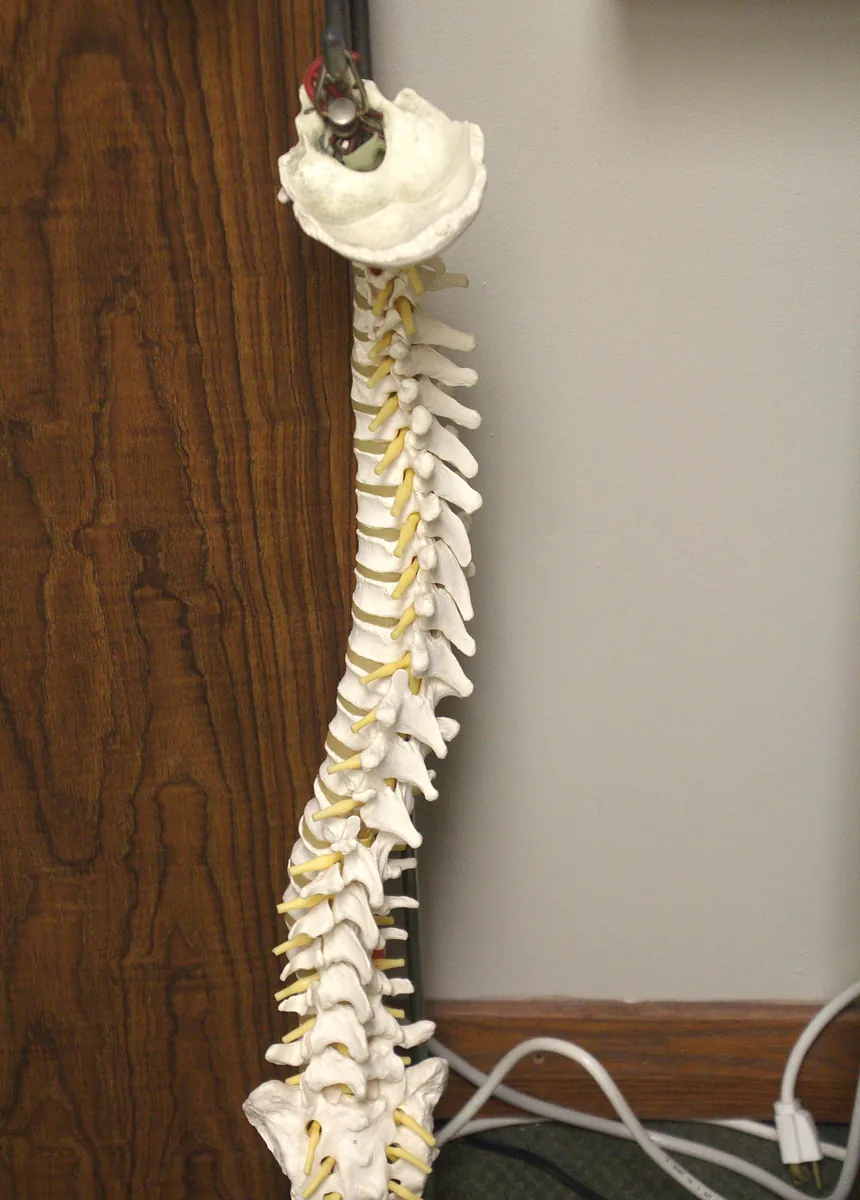
About scoliosis
Scoliosis curves often look like an S or a C. The most common type has no known cause and usually appears around the growth spurt before puberty. A doctor measures the curve on an X-ray. Adults with scoliosis may notice back pain or fatigue.
Common signs
- Uneven shoulders or waist
- One shoulder blade that sticks out more
- Leaning to one side
- Back pain or fatigue, especially in adults
Get care right away if you have
- A curve that seems to be getting worse quickly in a growing child
- New numbness, weakness or trouble walking
How we help at Grace Wellness
An exam and digital X-rays on site show the size of the curve.
Care focuses on comfort, mobility and strength through gentle adjustments and exercises. When a curve needs bracing or a specialist, we refer you.
What happens at your first visit
- Paperwork. A few forms about your health. Fill them out online before you arrive to save time.
- Consultation and exam. You talk through your symptoms and goals, then your doctor checks posture, range of motion, reflexes and strength.
- X-rays, only if needed. Taken right here in the office, no separate appointment.
- Your first treatment. In most cases you're treated the same day, and your doctor explains each step before starting.
Questions patients ask
Can chiropractic straighten scoliosis?
Our care focuses on comfort, mobility and strength rather than promising to change the curve. Growing children with curves that are getting worse may need bracing or a specialist, and we'll refer you.
Do you see kids with scoliosis?
Yes. Every child gets their own exam first, and we coordinate with your pediatrician when needed.
Related care
Sources: MedlinePlus: Scoliosis. This page is general information, not a diagnosis. Your doctor will examine you and explain your options.